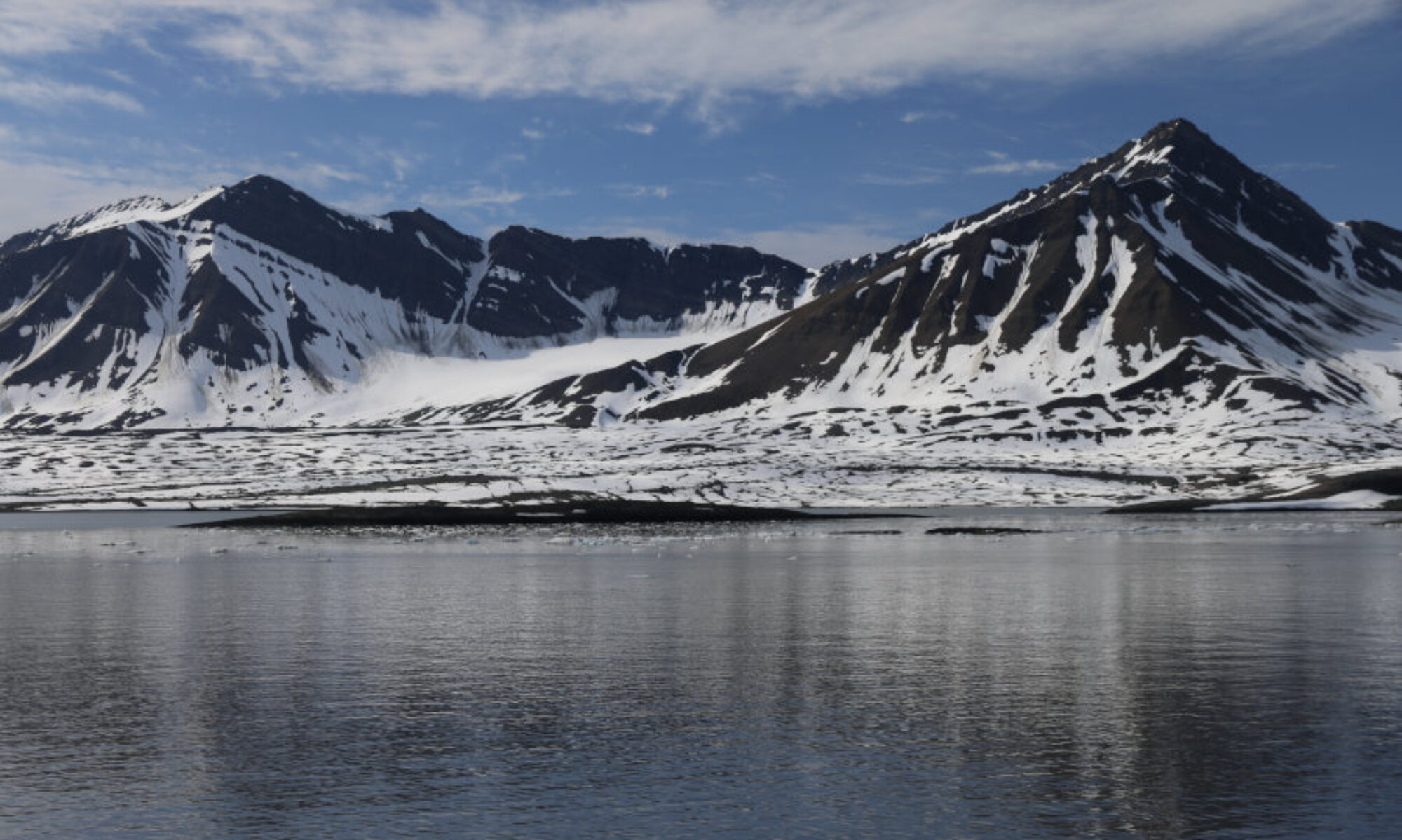
At 78 degrees north, Svalbard feels less like a destination than another world. Vast glaciers descend towards dark fjords, sharp mountains rise from the sea, and in summer the sun remains above the horizon for weeks. In winter, the landscape transforms under snow and blue twilight, while the Northern Lights can illuminate the sky.
The appeal of Svalbard lies in its extraordinary sense of space. There are no roads connecting the settlements, and beyond Longyearbyen begins an immense wilderness inhabited by polar bears, Arctic foxes, reindeer, walruses and thousands of seabirds. A boat trip along the coast can bring visitors close to towering glaciers and remote beaches, while kayaking offers a quieter perspective on the fjords. In winter, dog sledding and snowmobile excursions provide another way to experience the frozen landscape.
Yet Svalbard is not simply a wilderness story. Its human history is remarkably rich. The Dutch explorer Willem Barentsz made the first undisputed European discovery of the archipelago in 1596 and named its largest island Spitsbergen, meaning “pointed mountains”. For centuries, whalers, hunters and explorers came here in search of opportunity and adventure. International whaling flourished between the 17th and 18th centuries, leaving traces along the coast that can still be seen today.
The modern history of Svalbard was shaped by coal. In 1906, American mining pioneer John Munroe Longyear established a mine and founded the settlement that would become Longyearbyen. Ten years later, Norwegian interests took over the operation, and the settlement received its present name. The Svalbard Treaty, signed in 1920 and entering into force in 1925, formally recognised Norwegian sovereignty over the archipelago.
Today, visitors can explore this history in Longyearbyen, visit the Svalbard Museum or former mines, then head out into the wilderness by boat, kayak, dog sled or snowmobile. The experience is ultimately about contrasts: darkness and midnight sun, silence and wildlife, ancient mountains and traces of human ambition. Svalbard is beautiful precisely because it remains wild, immense and just a little beyond the familiar.